New Heights Climbing How to Climb in New Heights
Treat every hold as a real contact, then move the hips before the next hand.
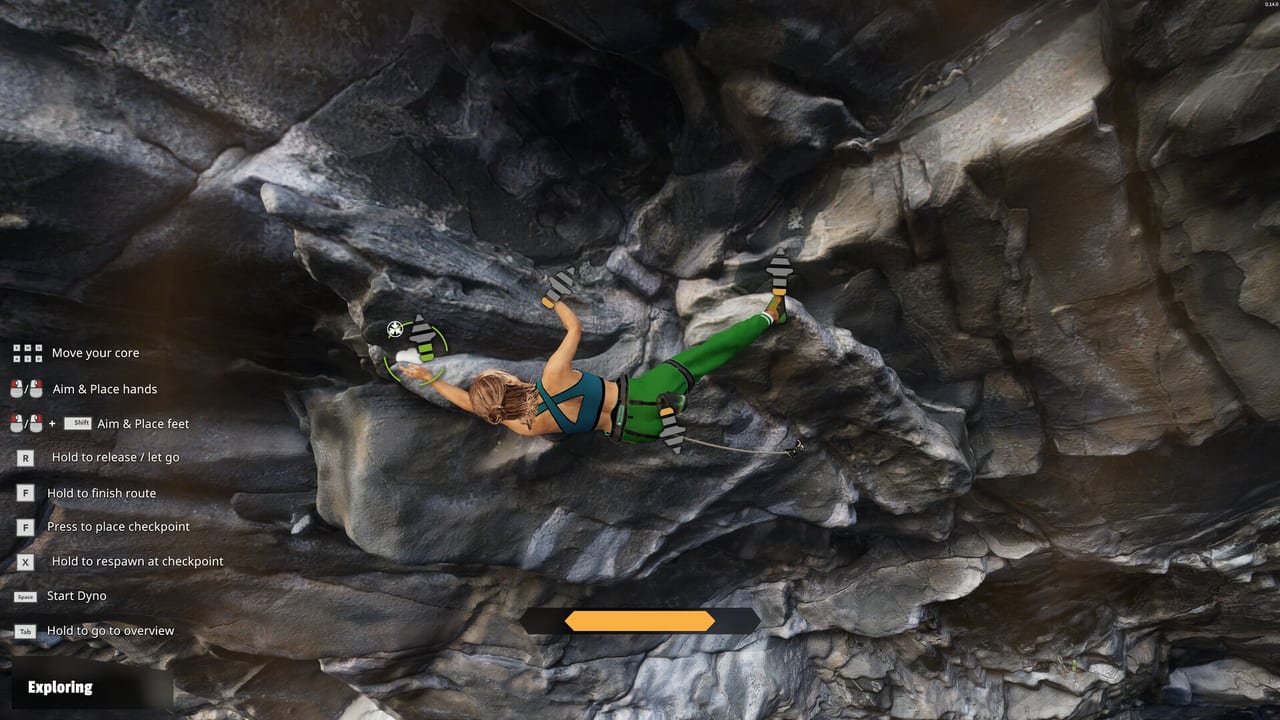
The climbing solver is the whole game. Wikkl Works started with animation-plus-IK prototypes, then threw them out because they could not fake balance. The live character is physics-based: grip quality, hold direction, and body position decide whether you stick. This page is the technique layer on top of the controls map. Watch the embedded session for the feel, then drill the rules below on a quiet Font slab.
Read the rock, not the texture
Photogrammetry captures real cliffs, so albedo can lie. A dark streak might be moss, a painted shadow, or a real edge. If you keep grabbing ghosts, enable textureless surface scan from the 2026 options. You will see the mesh the solver actually uses. Community members asked for that mode specifically because Font sandstone photographs wetter and rounder than it climbs.
Arrows sit on the limb you are aiming. Empty: no feature. Red: feature exists, angle is wrong for this hip position. Amber: you can smear for a second. Green: weight it. Hold direction matters as much as colour. Pull on holds that face away; push on holds that face you. When two contacts face opposite ways you get the inverse-support bonus the gym wall is built to teach. Pinches, cracks, and pockets are called out in the 2026 Hababuniken playthrough as extra support — hunt them instead of slapping the biggest blob.
Sequence like a real boulder problem
A send is a sequence, not a sprint. Place a green hand. Bring the core under it with WASD. Place a foot so the hips can rest. Release the trailing hand with R. Repeat. If you flag the next hand before the hips arrive, the old contact overloads even if both arrows looked friendly. Overhangs need an earlier hip drive; slabs need quieter feet and more smear patience.
Rest on good stances. Total support too low is the fall condition — you will hear it in the ragdoll before you see the respawn. The 2024 patches added a fall-time penalty on timed runs, so panicked matching is expensive on the leaderboards. Ghosts help you see a cleaner beta without turning the session into a race.
Dynos, matching, and power
Space starts a dyno. Early Early Access dynos were twitchy; the summer 2024 notes say they are more stable, less abusable, and less disorienting. Use them for a real gap, not as a skip for footwork. After a catch, freeze the core before you match. A power boost (shown in 2026 gym footage) spikes strength for a desperate move. Spend it on a lock-off, not on every crux.
Matching two hands on one hold is legal and often required on Font. The second hand usually arrives amber until the hips sit. Drop a foot or flag the opposite leg to unload. Automatic limb release, if you enabled it, will drop a dead arm for you — useful on endurance pitches, dangerous if you still needed that finger.
Outdoor application
On Fontainebleau, think circuits: easy green lines first, then the famous Elephant and Cul de Chien problems once your smear game exists. Freÿr in Belgium is a 30-minute sport day — clip, rest on the rope, continue. Hanshelleren is the opposite: huge, steep, and honest about how little beginner climbing lives there. Pick sectors from locations and grades from the route ranking.
The 2026 climbing rework aimed for consistency, flexibility, and friendlier input without turning the sim into an arcade grab-anything. If a 2023 video shows you shimmying along a wall with IK, ignore the animation and copy the arrow logic only. For the first-hour checklist, go back to getting started. For rope specifics, open belaying.
Good climbing in New Heights looks slow from the couch and fast in your hands. If a clip of yours is a blur of red arrows, you are still jumping. If it is a string of green contacts with hips always under the work, you are climbing.
Frequently Asked Questions
Quick answers to the most common questions.
What does a red arrow mean?
The feature is there but the angle or your hip position will not hold weight. Reposition the core or pick another contact.
When should I dyno?
When a static reach cannot arrive green. Default key is Space. Catch, then freeze the core before matching.
Why enable textureless scan?
Photogrammetry textures can look like holds that are not in the collision mesh. Scan mode shows the surface the solver uses.